FAIR USE NOTICE

FAIR USE NOTICE

A BEAR MARKET ECONOMICS BLOG

Occupy Dissent


This site may contain copyrighted material the use of which has not always been specifically authorized by the copyright owner. We are making such material available in an effort to advance understanding of environmental, political, human rights, economic, democracy, scientific, and social justice issues, etc. we believe this constitutes a ‘fair use’ of any such copyrighted material as provided for in section 107 of the US Copyright Law.

In accordance with Title 17 U.S.C. Section 107, the material on this site is distributed without profit to those who have expressed a prior interest in receiving the included information for research and educational purposes. For more information go to: http://www.law.cornell.edu/uscode/17/107.shtml

If you wish to use copyrighted material from this site for purposes of your own that go beyond ‘fair use’, you must obtain permission from the copyright owner.

FAIR USE NOTICE FAIR USE NOTICE: This page may contain copyrighted material the use of which has not been specifically authorized by the copyright owner. This website distributes this material without profit to those who have expressed a prior interest in receiving the included information for scientific, research and educational purposes. We believe this constitutes a fair use of any such copyrighted material as provided for in 17 U.S.C § 107.

Read more at: http://www.etupdates.com/fair-use-notice/#.UpzWQRL3l5M | ET. Updates
FAIR USE NOTICE FAIR USE NOTICE: This page may contain copyrighted material the use of which has not been specifically authorized by the copyright owner. This website distributes this material without profit to those who have expressed a prior interest in receiving the included information for scientific, research and educational purposes. We believe this constitutes a fair use of any such copyrighted material as provided for in 17 U.S.C § 107.

Read more at: http://www.etupdates.com/fair-use-notice/#.UpzWQRL3l5M | ET. Updates

All Blogs licensed under Creative Commons Attribution 3.0

Creative Commons License
This work is licensed under a Creative Commons Attribution 3.0 Unported License.

Monday, June 2, 2014

The Sermon On The Mount's Lost Ending (Warning: Obscenity)


Goblinbooks


SUNDAY, FEBRUARY 10, 2013


The Sermon On The Mount's Lost Ending (Warning: Obscenity)


When he was come down from the mountain, great multitudes followed him... And then he stopped, and looked around at the people.

"Really?" he asked. "No one's going to call me on any of this? You're just going to hit me with those stupid grins like I handed you a plate of butter cookies, because I said a whole bunch of stuff about being nice and everyone likes hearing about being nice...

"Is that it?

"No, you just don't understand. Let's all put our brunch plans on hold, because if you really heard what I said, you'd be absolutely terrified. You'd want to run or give up your faith, or kill me right now, because what I said was impossible. What I said is absolutely going to break you. If you're lucky.

"Let's review: First, every powerless loser on the planet is doing better than you are right now. The meek, the mourning, the poor in spirit - they're all going to win. And that means every single bit of privilege you're spending your whole life chasing after is useless. And before you can really comprehend how upside down you are, let me just reaffirm every crazy rule and regulation in the original Law. The shellfish, the pork, and that utterly bizarre stuff about killing birds to cure your leprosy. It's in effect until the end of the earth. So you've got that nonsense rattling around in your brain forever.

"But wait. I'll make it even harder. You can't get angry without cause. You can't wrong anybody for any reason. You can't get divorced, and you can't even look at a woman with lustful thoughts - I mean, seriously, how many of you people have been checking out some talent just now while I said that? You have to be willing to mutilate yourself to be perfect. Give your enemy every advantage, and pray that God Himself helps him. Donate money whenever you're asked, and never, ever be showy about any of this. And be cheerful while it's happening - did you catch that? - I'm commanding you to smile while the world tortures you. You must literally have no thought for your own survival.

"I hope you were listening. Because if you were, you'd know that you will absolutely fail at what I'm asking of you. You will fall short almost every single hour of every day you are conscious, and with the kinds of standards I'm setting, you're probably going to break some of these laws in your dreams.

"What reasons could I have for this insanity? Won't this just put anyone who tries to follow me into a constant moral crisis? That can't be the point, can it?

"Because one of two things would happen:

"You might spend the rest of your life desperately trying to be good and cheerful at the same time, interrogating your motivations for everything, chasing your own thoughts, and never turning down a chance to help anyone you come across. You will destroy everything you've built up for yourself; you'll throw it all away, and it simply won't be enough, and the only thing that will keep you going is you just know that you can do more. You'll be exhausted and happy, because good cheer is part of your task. You'll have to forgive everyone, because that will be your only hope of survival. You will be utterly certain you aren't better than others. You won't care. You won't have time for any of that. And I'll have an army of you.

"Or you might just lawyer up. Argue. Quibble. You might convince yourself I didn't say what I just said. Someone will have a convenient vision about the crazy dietary stuff. Someone will go back to the old text and search for other loopholes. Every one of you will find a thousand ways to excuse yourselves and a thousand ways to convict others, to make the full weight of my commandments crush everyone without power, everyone you don't like, while you always find a way to wriggle free. While you always find a preacher who will help you. I see a guy with a spider tattoo on his face cooking barbecue at a church fundraiser on a Saturday, and in between mouthfuls of greasy abomination he's talking about how he and his third wife decided that the government needs to enforce Biblical family values. I see powerful clergy convincing you it's necessary to be mean-spirited and jealous and small, only they don't say it that way - they use words like love and compassion. I see a man on a golden throne praying for the souls of the poor while he takes their money. The history of your faith will be a long, sordid, pointless account of people using the burden of my words to bury each other alive.

"And if I mean this, if I really mean it, that's because I want it to be one or the other. I want victory or destruction. I want an end to any question about whether I exist and whether I own the world. Whether you even deserve a God, this earth, or your very lives. And I'm counting on you people, you ridiculous people, to make my case for me. Either you will flip the world inside out with love... or turn every church into an obscenity.

"Who says I don't play with dice?"

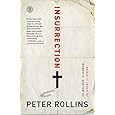
Peter Rollins Insurrection - an early review, part 1


Peter Rollins Insurrection - an early review, part 1

SATURDAY, AUGUST 13, 2011

I was asked to review the pre-release version of Peter Rollins' new book Insurrection - To Believe is Human, to Doubt Divine. There's a lot of good stuff in it, so I'm planning on covering it over a few posts. In this first post I want to deal with his theology of the cross, which is the core thesis of his book. Before I do though, I want to give a few caveats:

First, I'll be quoting from the pre-release version. Those quotes may change or be refined in the final version. Second, (and more importantly) I will be disagreeing with a lot of what Pete says. That does not mean that I don't like where he is coming from. I do. I consider this a friendly review/critique among common allies. As you will see, I strongly disagreewith him on some major areas, but if you are at all familiar with Peter Rollins' thought, you'll know that he wants people to disagree, and not to just passively swallow all he says. As he writes in Insurrection, truth is found "in the ongoing testing and transformation of those claims through the fires of passionate, loving debate." So it is in that spirit that I offer this:

There are several "flavors" to the theology of the cross: Luther, Moltmann, John Douglas Hall, Bonhoeffer, etc. Rollins' theology of the cross is largely built off of Bonhoeffer's idea of becoming "religionless." Rollins refers to this as "a/theism" which he contrasts with the New Atheism of folks like Richard Dawkins which is a mere intellectual rejection of theism. Rollins' a/theism in contrast is about the emotional loss of God, the feeling of forsakenness and utter loss that Jesus felt on the cross when he cried out "My God, my God, why have you forsaken me?" Compared to this, Dawkins' atheism is detached and cheap -- in the end New Atheism is just a type of fundamentalism with all the same intolerance and arrogant certainty. The emotional a/theism Rollins advocates in contrast rips away at that arrogant certainty.

Rollins wants to dismantle religious systems of comfort which lead us to mask over and ignore hurt and oppression. His theology of the cross therefore involves the striping way of these securities and comforts, resulting in the "trauma" of personally experiencing the absence of God where one is "crushed by a deep existential loss of certainty" and we "give up everything including God" (his emphasis). That is a very provocative statement, but if one can read on to the end of the book, we discover that what Rollins ultimately means here is the loss of the religious image of God, the loss of our immature picture of God as a sort of heavenly grandpa. This is the theology of the cross that Bonhoeffer wrote of from inside the German concentration camp before his execution. In the face of the Holocaust, Bonhoeffer knew we needed the God on the cross, the God who is there in the middle of our suffering, in the middle of an unjust and broken world.

The question is: In losing the God of religious comfort and certainty, do we also lose the God of hope? It is here that I think Rollins' theology goes astray because he mixes up the meaning of the Resurrection with the meaning of the Incarnation and Crucifixion. Rollins writes that to affirm the resurrection means "embracing the broken world." Resurrection life, he writes, is a way of "truly affirming life" in the midst of "the experience of death we find in the crucifixion." But that is not the meaning of the Resurrection, it is the meaning of the Incarnation. The meaning of the Resurrection is that, despite all the brokenness in our world, we have hope that there will one day be an end to sickness, death, and hurt. That is what the resurrection means. Rollins adamantly rejects the hope that “everything will work out in the end” as an immature illusion that he aims to strip away. In other words, his theology of the cross annuls the hope of the Resurrection. He writes, “In sharp contrast then to the idea that, at the heart of Christianity, we find the loving embrace of some Supreme Being; to participate in Christ’s Crucifixion involves experiencing the destruction of all cosmic security. Here, in this experience, radical doubt, unknowing, loss, desolation, and forsakenness are to be found.”

Rollins sees the Resurrection as “the state of being in which one is able to embrace the cold embrace of the cross.” Now, I fully agree that God embraces us in all of our ugliness and pain (that’s the meaning of the Incarnation), but I also hope Rollins would agree that God does not affirm abuse; God does not want us to be victimized by injustice, or by our own self-hatred; God does not want us to drown in our in despair and grief. God loves us in our hurt, but God does not love hurt, and neither should we. The cross, in embracing us in our ugliness, does not advocate oppression or hurt, rather it is a protest against it. As Moltmann says, the suffering God is the protesting God.

Rollins is all for protest I'm sure. (Heck, that's what "insurrection" means!) But in denying the meaning of the Resurrection, he pulls the rug out from under himself. It is a theology of the cross without a theology of the Resurrection, and therefore without Resurrection hope. So while I affirm all that Rollins affirms, my problem is with what he rejects. In the end, I think he throws the baby out with the bathwater. The gospel is more than that. I want a bigger insurrection. I want an insurrection rooted in the Resurrection.

Monday, January 20, 2014

The radical MLK we need today

SALON


The radical MLK we need today


As the nation rediscovers poverty, it’s time to replace the safe, airbrushed icon with the revolutionary he was 


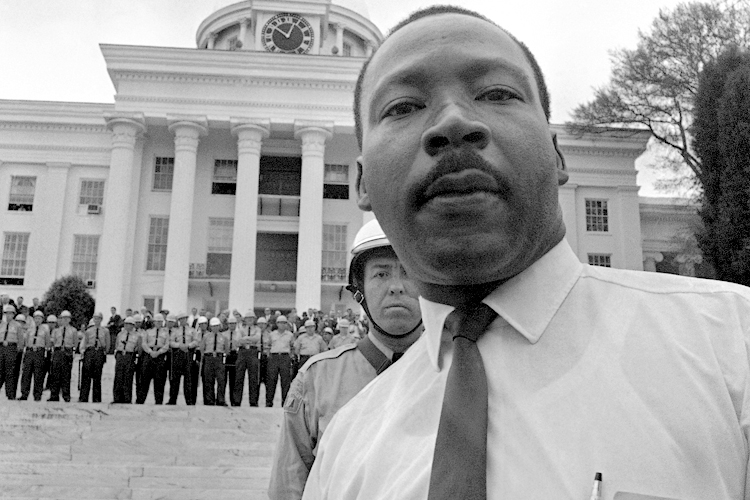
The radical MLK we need todayState troopers stand shoulder to shoulder on the steps of Alabama's State Capitol on March 25, 1965, barring Dr. Martin Luther King, Jr. from entering. (Credit: AP)
When Nelson Mandela died last month, I envied South Africans who had worked alongside him for freedom: Americans haven’t gotten to see many of our icons of justice get that old. My immediate thought was of Dr. Martin Luther King Jr., assassinated at 39, though Bobby and John Kennedy, Malcolm X and Medgar Evers, quickly followed.

But the inescapable image was King. Even if the freedom struggle of the 1960s didn’t end up letting King grow old like Mandela, let alone lead his country as president, it was hard not to compare the two, especially since Mandela so often declared his debt to his younger American ally.

King and Mandela had much in common, but one thing stands out this week: As they were lionized globally, both were deradicalized, pasteurized and homogenized, made safe for mass consumption. Each was in favor of a radical redistribution of global wealth. Each crusaded against poverty and inequality and war. Both did it with an equanimity and ebullience and capacity to forgive and love their enemies that made it easy to canonize them in a secular way. White people love being given the benefit of the doubt and/or being forgiven. I speak from experience.

But now, as the country turns again to issues of income inequality and poverty, and economic populism is said to be having a “moment,” maybe it’s time to remember Dr. King, the radical. The one who died trying to ignite a Poor People’s Movement that he saw as the natural outcome of the civil rights movement. The one who tried to branch out to fight poverty and war, but at least in his lifetime – and so far in ours – didn’t succeed.

* * *

I loved pretty much everything about the celebration of the 50th anniversary of the March on Washington last year, except how the right got it so wrong. It seemed to be the beginning of a movement to reclaim the real MLK, especially among liberals. King was of course celebrated hugely, but so were lefty heroes who never get enough credit, like Bayard Rustin and A. Philip Randolph. There were stories about “The Socialists Behind the March on Washington,” as well as about the media’s and the Kennedy administration’s wrongheaded fears of violence.

Wednesday, August 14, 2013

Undercover Agents Infiltrated Tar Sands Resistance Camp to Break up Planned Protest

 Earth Island Journal

Latest News


TransCanada and Department of Homeland Security keep close eye on activists, FOIA documents reveal


After a week of careful planning, environmentalists attending a tar sands resistance action camp in Oklahoma thought they had the element of surprise — but they would soon learn that their moves were being closely watched by law enforcement officials and TransCanada, the very company they
were targeting.
 
 
tar sands action training camp 
 
 
According to documents obtained by Earth Island Journal, investigators from the Bryan County
Sherriff's Department had been spying on a Great Plains Tar Sands Resistance training camp
that took place from March 18 to March 22 and which brought together local landowners,
Indigenous communities, and environmental groups opposed to the pipeline.


On the morning of March 22 activists had planned to block the gates at the company’s strategic oil reserves in Cushing, Oklahoma as part of the larger protest movement against TransCanada’s tar sands pipeline. But when they showed up in the early morning hours and began unloading equipment from their vehicles they were confronted by police officers. Stefan Warner, an organizer with Great Plains Tar Sands Resistance, says some of the vehicles en route to the protest site were pulled over even before they had reached Cushing. He estimates that roughly 50 people would have participated— either risking arrest or providing support. The act of nonviolent civil disobedience, weeks in the planning, was called off.

“For a small sleepy Oklahoma town to be saturated with police officers on a pre-dawn weekday leaves only one reasonable conclusion,” says Ron Seifert, an organizer with an affiliated group called Tar Sands Blockade. “They were there on purpose, expecting something to happen.”

Seifert is exactly right. According to documents obtained by Earth Island Journal, investigators from the Bryan County Sherriff’s Department had been spying on a Great Plains Tar Sands Resistance training camp that took place from March 18 to March 22 and which brought together local landowners, Indigenous communities, and environmental groups opposed to the pipeline.


excerpt from undercover investigation report
An excerpt from an official report on the "Undercover Investigation into the GPTSR Training Camp" indicates that at least two law
enforcement officers from the Bryan County Sherriff’s Department infiltrated the training camp and drafted a detailed report about
the upcoming protest, internal strategy, and the character of the protesters themselves.
 
At least two law enforcement officers infiltrated the training camp and drafted a detailed report about the upcoming protest, internal strategy, and the character of the protesters themselves. The undercover investigator who wrote the report put the tar sands opponents into five different groups: eco-activists (who “truly wanted to live off the grid”); Occupy members; Native American activists (“who blamed all forms of government for the poor state of being that most American Indians are living in”); Anarchists (“many wore upside down American flags”); and locals from Oklahoma (who “had concerns about the pipeline harming the community”).

The undercover agent’s report was obtained by Douglas Parr, an Oklahoma attorney who represented three activists (all lifelong Oklahomans) who were arrested in mid April for blockading a tar sands pipeline construction site. “During the discovery in the Bryan county cases we received material indicating that there had been infiltration of the Great Plains Tar Sands Resistance camp by police agents,” Parr says. At least one of the undercover investigators attended an “action planning” meeting during which everyone was asked to put their cell phones or other electronic devices into a green bucket for security reasons. The investigator goes on to explain that he was able to obtain sensitive information regarding the location of the upcoming Cushing protest, which would mark the culmination of the week of training. “This investigator was able to obtain an approximate location based off a question that he asked to the person in charge of media,” he wrote. He then wryly notes that, “It did not appear…that our phones had been tampered with.”

(The memo also states that organizers at the meeting went to great lengths not to give police any cause to disrupt the gathering. The investigator writes: “We were repeatedly told this was a substance free camp. No drug or alcohol use would be permitted on the premises and always ask permission before touching anyone. Investigators were told that we did not need to give the police any reason to enter the camp.” They were also given a pamphlet that instructed any agent of TransCanada, the FBI, or other law enforcement agency to immediately notify the event organizers.)


excerpt from undercover investigation report


The infiltration of the Great Plains Tar Sands Resistance action camp and pre-emption of the Cushing protest is part of a larger pattern of government surveillance of tar sands protesters. According to other documents obtained by Earth Island Journal under an Open Records Act request, Department of Homeland Security staff has been keeping close tabs on pipeline opponents — and routinely sharing that information with TransCanada, and vice versa.

In March TransCanada gave a briefing on corporate security to a Criminal Intelligence Analyst with the Oklahoma Information Fusion Center, the state level branch of Homeland Security. The conversation took place just as the action camp was getting underway. The following day, Diane Hogue, the Center’s Intelligence Analyst, asked TransCanada to review and comment on the agency’s classified situational awareness bulletin. Michael Nagina, Corporate Security Advisor for TransCanada, made two small suggestions and wrote, “With the above changes I am comfortable with the content.”

Then, in an email to TransCanada on March 19 (the second day of the action camp) Hogue seems to refer to the undercover investigation taking place. “Our folks in the area say there are between 120-150 participants,” Hogue wrote in an email to Nagina. (The Oklahoma Information Fusion Center declined to comment for this story.)

It is unclear if the information gathered at the training camp was shared directly with TransCanada. However, the company was given access to the Fusion Center’s situational awareness bulletin just a few days before the Cushing action was scheduled to take place.

In an emailed statement, TransCanada spokesperson Shawn Howard did not directly address the Tar Sands Resistance training camp. Howard described law enforcement as being interested in what the company has done to prepare for activities designed to “slow approval or construction” of the pipeline project. “When we are asked to share what we have learned or are prepared for, we are there to share our experience – not direct law enforcement,” he wrote.


excerpt from undercover investigation report
 
At least one of the investigators seemed to have gained the trust of the direct action activists.
The evidence of heightened cooperation between TransCanada and law enforcement agencies in Oklahoma and Texas comes just over a month after it was revealed that the company had given a PowerPoint presentation on corporate security to the FBI and law enforcement officials in Nebraska. TransCanada also held an “interactive session” with law enforcement in Oklahoma City about the company’s security strategy in early 2012. In their PowerPoint presentation, TransCanada employees suggested that district attorneys should explore “state or federal anti-terrorism laws” in prosecuting activists. They also included profiles of key organizers and a list of activists previously arrested for acts of nonviolent civil disobedience in Texas and Oklahoma. In addition to TransCanada’s presentation, a representative of Nebraska’s Homeland Security Fusion Center briefed attendees on an “intelligence sharing role/plan relevant to the pipeline project.” This is likely related to the Homeland Security Information Sharing Network, which provides public and private sector partners as well as law enforcement access to sensitive information.

The earlier cache of documents, first released to the press by Bold Nebraska, an environmental organization opposed to the pipeline, shows that TransCanada has established close ties with state and federal law enforcement agencies along the proposed pipeline route. For example, in an exchange with FBI agents in South Dakota, TransCanada’s Corporate Security Advisor, Michael Nagina, jokes that, “I can be the cure for insomnia so sure hope you can still attend!” Although they were unable to make the Nebraska meeting, one of the agents responded, “Assuming approval of the pipeline, we would like to get together to discuss a timeline for installation through our territory.”

The new documents also provide an interesting glimpse into the revolving door between state law enforcement agencies and the private sector, especially in areas where fracking and pipeline construction have become big business. One of the individuals providing information to the Texas Department of Homeland Security’s Intelligence and Counterterrorism Division is currently the Security Manager at Anadarko Petroleum, one of the world’s largest independent oil and natural gas exploration and production companies. In 2011, at a natural gas industry stakeholder relations conference, a spokesperson for Anadarko compared the anti-drilling movement to an “insurgency” and suggested that attendees download the US Army/Marine Corps Counterinsurgency Manual.

protestors occupy tree
 
The infiltration of the Great Plains Tar Sands Resistance action camp and pre-emption of the
Cushing protest is part of a larger pattern of government surveillance of tar sands protesters.
 
LC Wilson, the Anadarko Security Manager shown by the documents to be providing information to the Texas Fusion Center, is more than just a friend of law enforcement. From 2009 to 2011 he served as Regional Commander of the Texas Department of Public Safety, which oversees law enforcement statewide. Wilson began his career with the Department of Public Safety in 1979 and was named a Texas Ranger — an elite law enforcement unit — in 1988, eventually working his way up to Assistant Chief. Such connections would be of great value to a corporation like Anadarko, which has invested heavily in security operations.

In an email to Litto Paul Bacas, a Critical Infrastructure Planner (and former intelligence analyst) with Texas Homeland Security, Wilson, using his Anadarko address, writes, “we find no intel specific for Texas. There is active recruitment for directed action to take place in Oklahoma as per article. I will forward any intel we come across on our end, especially if it concerns Texas.” The article he was referring to was written by a member of Occupy Denver calling on all “occupiers and occupy networks” to attend the Great Plains Tar Sands Resistance training camp.

Wilson is not the only former law enforcement official on Anadarko’s security team; Jeffrey Sweetin, the company’s Regional Security Manager, was a special agent with the Drug Enforcement Administration for more than 20 years heading up its Rocky Mountain division. At Anadarko, according to Sweetin’s profile on Linkedin, his responsibilities include “security program development” and “law enforcement liaison.”

Other large oil and gas companies have recruited local law enforcement to fill high-level security positions. In 2010, long-time Bradford County Sheriff Steve Evans resigned to take a position as senior security officer for Chesapeake Energy in Pennsylvania. Evans was one of a handful of gas industry security directors to receive intelligence bulletins compiled by a private security firm and distributed by the Pennsylvania Department of Homeland Security. Bradford County happens to be ground zero for natural gas drilling in the Marcellus Shale, with more active wells than any other county in the state. In addition to Evans, several deputies of the Bradford County Sheriff’s office have worked for Chesapeake — through a private contractor, TriCorps Security — as “off-duty” security personnel. TransCanada has also come to rely on off duty police officers to patrol construction sites and protest camps, raising questions about whose interests the sworn officers are serving.

Of course for corporations like TransCanada and Anadarko having law enforcement on their side (or in their pocket) is more than just a good business move. It gives them access to classified information and valuable intelligence — essential weapons in any counterinsurgency campaign.

Adam Federman, Contributing Writer, Earth Island Journal

Adam Federman is a frequent contributor to Earth Island Journal. You can find more of his work at adamfederman.com</

Monday, August 12, 2013

The Moral Imperative of Activism

CommonDreams.org


Published on Monday, August 12, 2013 by Common Dreams

 
That America is in deep moral and legal trouble was pretty much obvious to everyone before Edward Snowden released official documents showing the extent to which the U.S. government has been playing fast and loose with the Fourth Amendment rights of Americans to be protected against unreasonable searches and seizures.
 
 
The 1965 Selma-to-Montgomery march was a key point in the civil rights movement. (File: Wikimedia)
 
Snowden’s revelations – as explosive as they are – were, in one sense, merely the latest challenge to those of us who took a solemn oath to support and defend the Constitution of the United States against all enemies foreign and domestic. That has been a commitment tested repeatedly in recent years, especially since the 9/11 attacks.
 
After all the many troubling disclosures — from torture to ”extraordinary renditions” to aggressive war under false pretenses to warrantless wiretaps to lethal drone strikes to whistleblowers prosecutions to the expanded “surveillance state” – it might be time to take a moment for what the Germans call “eine Denkpause,” a “thinking break.” And it is high time to heed and honor the Noah Principle: “No more awards for predicting rain; awards only for building arks.”
 
This is our summer of discontent. The question we need to ask ourselves is whether that discontent will move us to action. Never in my lifetime have there been such serious challenges to whether the Republic established by the Founders will survive. Immediately after the Constitutional Convention, Ben Franklin told a questioner that the new structure created “a Republic, if you can keep it.” He was right, of course; it is up to us.
 
So let’s face it. The Obama White House and its co-conspirators in Congress and the Judiciary have thrown the gauntlet down at our feet. It turned out that we are the ones we’ve been waiting for. As Annie Dillard, one of my favorite theologians, has put it, “There is only us; there never has been any other.” And as one of my favorite activists/prophets continued to insist, “Do not say there are not enough of us. There ARE enough of us!”
 
It seems we are guided far more by profits than by prophets. And without prophetic vision, the people perish.
 
Besides threats to basic constitutional rights and gross violations of international law, there are other pressing issues for Americans, especially the obscene, growing chasm between the very rich and the jobless (and often homeless) poor. There is widespread reluctance, even so, to ask the key questions?
Is it right to fire teachers, police and firefighters; to close libraries; leave students in permanent debt; gut safety-net programs – all by feigning lack of money? Yet, simultaneously, is it moral to squander on the Pentagon and military contractors half of the country’s discretionary income from taxes – an outlay equivalent to what the whole rest of the world put together spends for defense?
 
It seems we are guided far more by profits than by prophets. And without prophetic vision, the people perish.
 

Profit Margin

 
America’s lucrative war-making industry operates within a fiendishly self-perpetuating business model: U.S. military interventions around the world (including security arrangements to prop up unpopular allies and thus to thwart the will of large segments of national populations) guarantee an inexhaustible supply of “militants, insurgents, terrorists or simply ‘bad guys’” – a list that sometimes comes to include American citizens.
 
These troublemakers must be hunted down and vaporized by our remote killing machines, which inflict enough destruction and stir up enough outrage to generate even more “militants, insurgents, terrorists or simply ‘bad guys.’”
 
And, in turn, the blowback toward the United States — the occasional terrorist attack — creates enough fear at home to “justify” the introduction of draconian Third Reich-style “Enabling Act” legislation not very different from the unconstitutional laws ushering in the abuses in Germany 80 years ago.
 
With only muted murmur from “progressive” supporters, the Obama administration has continued much of the post-9/11 assault on constitutional rights begun by George W. Bush – and in regard to Barack Obama’s aggressive prosecutorial campaign against “leakers,” Obama has taken these transgressions even further.
 
Are we to look on, like the proverbial “obedient Germans,” as Establishment Washington validates the truth of James Madison’s warning: “If Tyranny and Oppression come to this land, it will be in the guise of fighting a foreign enemy.”
 
Yet, while countless billions of dollars are spent on “security” against “terrorism,” little attention is devoted to the truly existential threat from global warming. Can we adults in good conscience continue to shun the dire implications of climate change?
 
This question was again brought home to me personally on Aug. 6, as our ninth grandchild pushed her way out into a world with challenges undreamed of just decades ago. When she is my age, will she rue joining us last Tuesday? I can only hope she will forgive me and my generation for not having the guts to face down those whose unconscionable greed continues to rape what seemed to be a rather pure and pleasant planet when I made my appearance seven short decades ago.


Prophets on the Margin

And, then there is the worship of “free market” idolatry which has savaged America’s Great Middle Class and expanded the ranks of the desperate poor. The late Rabbi Abraham Heschel had challenging words for us: Decrying the agony of the “plundered poor,” Heschel insisted that wherever injustice takes place, “few are guilty, but all are responsible.” He added that, “Indifference to evil is more insidious than evil itself.”

 
“Success or efficiency are placed where they belong: in the background. They are not irrelevant, but they are far from central." –Daniel Berrigan
 
Dr. Martin Luther King, Jr., warned: “A time comes when silence is betrayal … We must speak with all the humility that is appropriate to our limited vision, but we must speak…. There is such a thing as being too late…. Life often leaves us standing bare, naked, and dejected with lost opportunity…. Over the bleached bones of numerous civilizations are written the pathetic words: ‘Too late.’”
 
Amid these daunting challenges – endless war, encroachment on liberties, environmental devastation and economic disparity – there is also the question: Are our churches riding shotgun for the System.
As truly historic events unfold in our country and abroad, I often think of Dietrich Bonhoeffer, the Lutheran pastor who founded the Confessing Church as an alternative to the overwhelming number of Catholics and Lutherans who gave priority to protecting themselves by going along with Hitler. How deeply disappointed Bonhoeffer was at the failure of the institutional church in Germany to put itself “where the battle rages.”
 
This is the phrase Martin Luther himself used centuries before: “If, I profess with the loudest voice and clearest exposition every portion of the truth of God except precisely that little point which the world and the devil are at the moment attacking, I am not confessing Christ, however boldly I may be professing him. Where the battle rages, there the loyalty of the soldier is proved and to be steady on all the battlefield, except there, is mere flight and disgrace if one flinches at that point.”
 
No one has put it better than a precious new friend I met on a “cruise” in June/July 2011 hoping to reach Gaza – author and poet Alice Walker – who said: “Activism is my rent for living on this planet.”
 
As some of you know, that attitude found her a passenger on “The Audacity of Hope” — the U.S. Boat to Gaza. On July 1, 2011, we made an activist break for the open sea and Gaza but were able to sail only nine nautical miles out of Athens before the Greek government, under strong pressure from the White House, ordered its Coast Guard to intercept us, bring us back to port, and impound our boat.


Okay to be Angry?

Recalling the anger I felt at the time, I was reminded that, all too often, people are conflicted about whether or not to allow themselves to be angry at such injustice – whether it be in Gaza, on the Aegean, or elsewhere. I had been in that category of doubt, until I remembered learning that none other than Thomas Aquinas had something very useful to say about anger.

 
In the Thirteenth Century, Aquinas wrote a lot about virtue and got quite angry when he realized there was no word in Latin for just the right amount of anger — for the virtue of anger. He had to go back to what Fourth-Century Doctor of the Church John Chrysostom said on the subject: “He or she who is not angry, when there is just cause for anger, sins.”
 
Why? Because as John Chrysostom put it, “Anger respicit bonum justitiae, anger looks to the good of Justice, and if you can live amid injustice without anger you are unjust.”
 
Aquinas added his own corollary; he railed against what he called “unreasoned patience,” which, he said, “sows the seeds of vice, nourishes negligence, and persuades not only evil people but good people to do evil.”
 
Frankly, I have not thought of us activists being virtuous — but maybe we are, at least in our willingness to channel our anger into challenging and changing the many injustices here and around the world. There should be no room these days for “unreasoned patience.”
 
One saving grace peculiar not only to the ancient prophets and theologians but to the Alice Walkers and Medea Benjamins of today is that they did not get hung up on the all-too-familiar drive for success. That drive, I think, is a distinctly American trait. We generally do not want to embark on some significant course of action without there being a reasonable prospect of success, do we? Who enjoys becoming the object of ridicule?
 
The felt imperative to be “successful” can be a real impediment to acting for Justice. One prophet/activist from whom I have drawn inspiration is Dan Berrigan. I’d like to share some of the wisdom that seeps through his autobiography, To Dwell in Peace.
 
Berrigan writes that after he, his brother Phil, and a small group of others had used homemade napalm to burn draft cards in Catonsville, Maryland, in May 1968 at the height of the Vietnam War, Dan mused about why he took such a risk:
“I came upon a precious insight. … Something like this: presupposing integrity and discipline, one is justified in entering upon a large risk; not indeed because the outcome is assured, but because the integrity and value of the act have spoken aloud. …
“Success or efficiency are placed where they belong: in the background. They are not irrelevant, but they are far from central. I was in need of such reflections as we faced the public after our crime. … All sides agreed — we were fools or renegades or plain crazy. …
“One had very little to go on; and one went ahead nonetheless. … The act was let go, its truth and goodness were entrusted to the four winds. Indeed, good consequences were of small matter to me, compared with the integrity of the action, the need responded to, the spirits lifted.”
The more recent prophets and activists I have known have generally been able to do this — to release the truth of the act to the four winds. And I am sure that helps them avoid taking themselves too seriously.


Anticipate the Jut-Jaw

Here’s how Dan Berrigan recounts the immediate aftermath of the action at Catonsville:

 
“We sat in custody in the back room of the Catonsville Post Office, weak with relief. …  Three or four FBI honchos entered portentously. Their leader, a jut-jawed paradigm, surveyed us from the doorway. His eagle-eye lit on Philip. He roared out: ‘Him again! Good God, I’m changing my religion!’
 
“I could think of no greater tribute to my brother.”
 
The Berrigans help affirm for me that this God of ours is a God of laughter, and we are the entertainment. And that’s just one reason a light touch seems to be required. Will we be successful? Wrong question. The right one is will we be faithful? Will we dare to go with the Berrigans to where the battle rages.
 
I am very much looking forward to being able to refresh my spirit, and also my sense of humor, with some later-day prophets at the upcoming Conference on the Moral Imperative of Activism, Aug. 16-17, at the National Kateri Tekakwitha Shrine in Fonda, New York.
 
Let me close with a poem written by the German writer Peter Gan in 1935 during the Third Reich. I think it summons us in a thoughtful way to contemplate who we are and what we are called to do – today.
 
But first the most important thing:
 
“What are you doing in these great times?
“Great, I say, for times seem great
to me, when each man driven
half to death by the era’s hate,
and standing in the place he’s given,
“Must willy-nilly contemplate
no less a thing than his own BEING!
A little breath, a second’s wait
May well suffice – you catch my meaning?”


Tuesday, August 6, 2013

Thousands in Asheville Declare: 'This is a Movement'


Moral Monday demonstrations come to mountains as protests 'follow the legislators home'

- Lauren McCauley, staff writer 


Over 5000 protesters packed downtown Asheville Monday to add their voice to the growing Moral Monday demonstrations. (Photo: @NoShock/ Twitter)“It’s nothing like being in the mountains with folks who know how to fight,” Rev. William J. Barber II, president of the North Carolina chapter of the NAACP, told a crowd of over 5,000 who packed into Asheville's Pack Square Park Monday evening.

As the Raleigh-based state legislature departed for their summer break, Moral Monday protesters took their demonstration on the road. Monday marked the 14th straight week of calling out the GOP-majority legislature and governor’s attack on education, social and economic equality and voting rights.

The Asheville Police Department gave varying estimates that the crowd swelled to anywhere from 5,000 to 10,000 people.

Cheering on the rousing speakers, protesters sang and carried signs focusing on the many issues currently being wracked by the state GOP: “Don’t steal our water,” “Protect voting rights, “Stop killing public education.”

"If all we do is despair—and even all we do is rally—we will not have met the challenge before us today,"Julie Mayfield, co-director at WNC Alliance, told the crowd. "Everyone has a role. Find yours and together we can put North Carolina back on track."

Later, the Citizen-Times reports, Barber led the crowd in new rendition of a civil rights song, “Ain’t Gonna Let Apodaca Slow Us Down,” —referencing Sen. Tom Apodaca, a Henderson County Republican.

The local NAACP and the other groups behind the demonstrations have vowed to bring the movement to all 13 of North Carolina's congressional districts.
As Barber said during a Monday afternoon news conference, their goal was to "follow the legislators home."

“You can’t do wrong in Raleigh and then hide back home,” he declared during the rally.

Advocating for members of the crowd to get more people registered to vote, Barber said that by taking the protests on the road the people of North Carolina will prove to the government that there is widespread support behind the Moral Monday demonstrations, AP reports.

“This is no momentary hyperventilation and liberal screaming match,” Barber said. “This is a movement.”

Below, watch some of the rousing moments from Barber's speech before the Asheville crowd.

Asheville's Citizen-Times compiled the following video with voices from Mountain Moral Monday.

_____________________

Tuesday, June 18, 2013

GAP Statement on Edward Snowden & NSA Domestic Surveillance


Government Accountability Project


GAP Statement on Edward Snowden & NSA Domestic Surveillance

E-mail Print PDF
1_photo_copy
Recently, the American public learned that the National Security Agency (NSA) has conducted, and continues to conduct, wholesale surveillance of U.S. citizens through a secretive data-mining program. The program collects the phone records, email exchanges, and internet histories of tens of millions of Americans who would otherwise have no knowledge of the secret program were it not for the disclosures of recent whistleblowers. The latest of these whistleblowers to come forward is former Booz Allen Hamilton federal contractor employee, Edward Snowden.

As the nation’s leading whistleblower protection and advocacy organization, the Government Accountability Project (GAP) would like to be clear about its position on each of the following points that relate to these significant revelations:


I. SNOWDEN IS A WHISTLEBLOWER.


Snowden disclosed information about a secret program that he reasonably believed to be illegal. Consequently, he meets the legal definition of a whistleblower, despite statements to the contrary made by numerous government officials and security pundits. Sen. Rand Paul (R-Ky), Sen. Mark Udall (D-Co), Rep. Loretta Sanchez (D-Ca), Rep. Thomas Massie (R-Ky), and Sen. Bernie Sanders (I-Vt) have also expressed concern about the potential illegality of the secret program. Moreover, Rep. Jim Sensenbrenner (R-Wi) who is one of the original authors of the Patriot Act – the oft-cited justification for this pervasive surveillance – has expressed similar misgiving.


II. SNOWDEN IS THE SUBJECT OF CLASSIC WHISTLEBLOWER RETALIATION.


Derogatory characterizations of Snowden‘s personal character by government officials do not negate his whistleblower status. On the contrary, such attacks are classic acts of predatory reprisal used against whistleblowers in the wake of their revelations.Snowden’s personal life, his motives and his whereabouts have all been called into question by government officials and pundits engaged in the reflexive response of institutional apologists. The guilty habitually seek to discredit the whistleblower by shifting the spotlight from the dissent to the dissenter. Historically, this pattern of abuse is clear from behavior towards whistleblowers Daniel Ellsberg, Mark Felt, Frank Serpico, Jeffrey Wigand, Jesselyn Radack, and recent NSA whistleblower Tom Drake.

III. THE ISSUE IS THE MESSAGE AND NOT THE MESSENGER.


As a matter of course, whistleblowers are discredited, but what truly matters is the disclosure itself. Snowden’s revelations have sparked a public debate about the balance between privacy and security – a debate that President Obama now claims to welcome. Until Snowden’s disclosures, however, the government had suppressed the facts that would make any serious debate possible.

IV. PERVASIVE SURVEILLANCE DOES NOT MEET THE STANDARD FOR CLASSIFIED INFORMATION.


Many have condemned Snowden for disclosing classified information, but documents are classified if they reveal sources or methods of intelligence-gathering used to protect the United States from its enemies. Domestic surveillance that is pervasive and secret is only a valid method of intelligence gathering if the country’s enemies include most of its own population. Moreover, under the governing Executive Order it is not legal to classify documents in order to cover up possible misconduct.

V. THE PUBLIC HAS A CONSTITUTIONAL RIGHT TO KNOW.


In a democracy, it is simply not acceptable to discover widespread government surveillance only after a whistleblower’s revelations. Because of Snowden’s disclosures we now know that Director of National Intelligence James Clapper deliberately misled the Senate Intelligence Committee when he stated on March 12, 2013 that the NSA did not purposefully collect any type of data from millions of Americans. Regardless of the justification for this policy, the public has a Constitutional right to know about these actions.

Unfortunately, the responsibility has fallen on whistleblowers to inform the public about critical policy issues – from warrantless wiretapping to torture. Whistleblowers remain the regulator of last resort.

VI. THERE IS A CLEAR HISTORY OF REPRISAL AGAINST NSA WHISTLEBLOWERS.


By communicating with the press, Snowden used the safest channel available to him to inform the public of wrongdoing. Nonetheless, government officials have been critical of him for not using internal agency channels – the same channels that have repeatedly failed to protect whistleblowers from reprisal in the past. In many cases, the critics are the exact officials who acted to exclude national security employees and contractors from the Whistleblower Protection Enhancement Act of 2012.

Prior to Snowden’s disclosures, NSA whistleblowers Tom Drake, William Binney and J. Kirk Wiebe, all clients of GAP, used internal mechanisms – including the NSA chain of command, Congressional committees, and the Department of Defense Inspector General – to report the massive waste and privacy violations of earlier incarnations of the NSA’s data collection program. Ultimately, the use of these internal channels served only to expose Binney, Drake and Wiebe to years-long criminal investigations and even FBI raids on their homes. As one example, consider that Tom Drake was subjected to a professionally and financially devastating prosecution under the Espionage Act. Despite a case against him that ultimately collapsed, Drake was labeled an “enemy of the state” and his career ruined.

VII. WE ARE WITNESSING THE CRIMINALIZATION OF WHISTLEBLOWING.


During the last decade, the legal rights for whistleblowers have expanded for many federal workers and contractors, with the one exception of employees within the intelligence community. The rights of these employees have significantly contracted. The Obama administration has conducted an unprecedented campaign against national security whistleblowers, bringing more Espionage Act indictments than all previous administrations combined.

Moreover, at the behest of the House Intelligence Committee, strengthened whistleblower protections for national security workers were stripped from major pieces of legislation such as the Whistleblower Protection Enhancement Act (for federal employees) and the National Defense Authorization Act of 2013 (for federal contractors). If those protections existed today, Snowden’s disclosures would have stood a greater chance of being addressed effectively from within the organization.

The actions already taken against Snowden are a punitive continuation of what has become a "War on Whistleblowers." Through a series of retaliatory measures, the federal government targets federal employees who speak out against gross waste, illegality, or fraud, rather than prosecuting individuals engaged in high crimes and misdemeanors. So far as we know, not one person from the NSA has yet to suffer any consequences for ordering, justifying or participating in the NSA’s domestic spying operation.

It is the opinion of GAP that recent events suggest the full might of the Department of Justice will be leveled at Snowden, including an indictment under the Espionage Act, while those who stretched their interpretation of the Patriot Act to encompass the private lives of millions of Americans will simply continue working.

VIII. IN THE SURVEILLANCE STATE, THE ENEMY IS THE WHISTLEBLOWER.


If every action has an opposite and equal reaction, the whistleblower is that reaction within the surveillance state. Dragnet electronic surveillance is a high-tech revival of tactics used to attack the civil rights movement and political enemies of the Nixon administration. Whistleblowers famously alerted the public to past government overreach, while helping to defend both national security and civil liberties.

In contrast, secrecy, retaliation and intimidation undermine our Constitutional rights and weaken our democratic processes more swiftly, more surely, and more corrosively than the acts of terror from which they purport to protect us.

Contact: Bea Edwards, Executive Director
Phone: 202.457.0034, ext. 155
Email: BeaE@whistleblower.org
Contact: Louis Clark, President
Phone: 202. 457.0034, ext. 129
Email: LouisC@whistleblower.org
Contact: Dylan Blaylock, Communications Director
Phone: 202.457.0034, ext. 137
Email: DylanB@whistleblower.org